
Vacant Properties
Vacant Properties Resources
Vacant, abandoned, and deteriorated properties (VAD) are residential, commercial, and industrial buildings or vacant lots that pose harm to residents and their community. Their owners or managers have not kept up the property, walked away, neglected paying taxes or utilities, or defaulted on mortgages.
Vacant, abandoned, and deteriorated properties (VAD) are residential, commercial, and industrial buildings or vacant lots that pose harm to residents and their community. (Vacant property is inclusive of vacant buildings and vacant lots. A vacant lot is a parcel without a structure, which could include a previously developed lot or an unbuildable lot.) Their owners or managers have not kept up the property, walked away, neglected paying taxes or utilities, or defaulted on mortgages. Deteriorated properties are structures in poor condition with damage or visible signs of deferred maintenance. They may be occupied or vacant.
Blight is a shorthand term many use to refer to properties they perceive as problematic in some way: appearing unsafe, visually unpleasant, or a threat to neighborhood property values. While a pervasive word in community revitalization, urban planning, and housing policy, Community Progress discourages using the term. It has historically been used to justify stripping low-income people and people of color of their homes in the name of “blight eradication.”
Examples of vacant, abandoned, and deteriorated properties include residential homes that remain vacant for long periods of time; abandoned, boarded-up buildings; vacant lots that attract trash and illegal dumping; vacant commercial properties; and abandoned industrial properties with environmental contamination (also known as brownfields).

Download our Vacant Properties Resources:
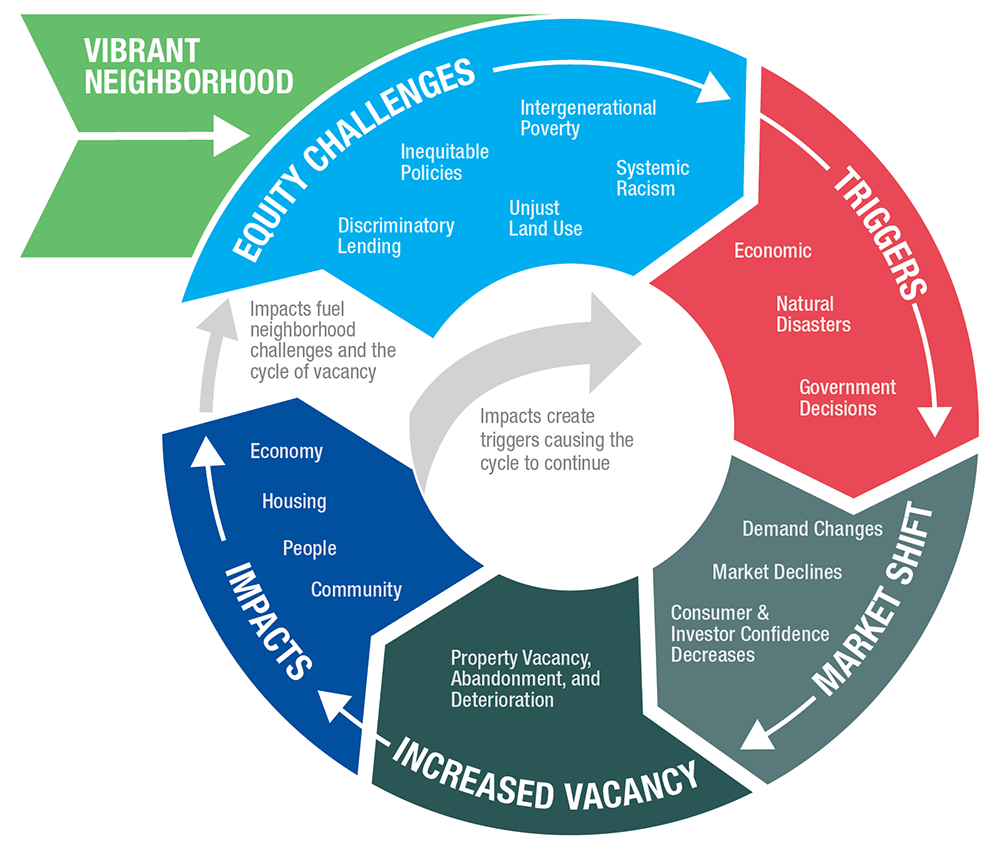
What Causes Systemic Vacancy?
This graphic depicts systemic vacancy, the community experience of widespread property vacancy caused by the combined actions of people, policies, and processes.
Featured Publications

West Jackson Property Condition and Resident Perception Survey Findings
What we know about vacant properties in Mississippi’s West Jackson neighborhood.
Chesapeake Land Bank Authority Strategic Plan
Community Progress worked with the Chesapeake Land Bank Authority to develop an ambitious strategic plan for the next five years.
Code Compliance in Providence, Rhode Island
Community Progress assessed Providence’s code enforcement approach for deteriorating, occupied rental properties and recommended improvements.
Other Related Content
Get Help For Your Community
We provide customized expert guidance to local and state leaders across the country to address systemic vacant, abandoned, and deteriorated property issues. Check out: our services, or send us a message to request help.