
How Land Banks and Under-Resourced Developers Can Collaborate to Build Affordable Housing
April 23, 2026
Topic(s): Community Revitalization, Land Banks

Though the affordable housing gap is enormous and growing, securing the financial resources to develop affordable housing is difficult. Mission-driven developers—who prioritize positive community impact—often struggle to access capital. This challenge is compounded in communities with limited financial resources and weak real estate markets. And these development hurdles only become harder to overcome with riskier property types, such as affordable housing.
It is nearly impossible for anyone to develop green, affordable housing, despite high demand for this property type in disinvested neighborhoods, especially under-resourced developers.
What do we mean by “under-resourced” developers?
“Under-resourced” real estate developers are those without access to family wealth. Access to wealth is key to success in development projects. Developers without it lack a network to call on to get seed money. They are less likely to have connections to networks that can provide education and knowledge. And they are less connected to other developers, impeding partnerships that are key to success in early projects and throughout development careers.
All developers without access to wealth face challenges—but developers of certain racial and ethnic demographics are less likely to have access to wealth. In 2022, the median wealth of white families was $285,000, compared to just $44,900 for Black families and $61,600 for Hispanic families. While white households make up 66 percent of US households, they hold 84.2 percent of total family wealth.
Many of these under-resourced developers are non-white—and in particular Black and Hispanic developers are underrepresented in the real estate development industry altogether. In the real estate and rental and leasing sector, Black Americans comprise only 1 percent of business owners but 14 percent of the total US population, while Hispanic Americans comprise 4 percent of business owners while making up 19 percent of the population. And this gap is even larger in the real estate development subsector—one analysis estimates that of 112,046 real estate developers in the US, only 447 (0.40 percent) are Black and 175 (0.16 percent) are Hispanic.
These developers face many barriers to entering the real estate industry and advancing their careers—even as they are well-equipped to steward positive outcomes for their communities.
What are the benefits of supporting under-resourced developers?
Non-white residents have been historically excluded not only from homeownership but also from land control and decision-making about their neighborhoods. When residents feel the redevelopment process is responsive to their needs and experiences, they feel more positive about the result. Developers with roots in the neighborhoods where they work have the cultural competency and relationships with other residents to understand the needs that redevelopment projects must meet and navigate the process with sensitivity.
Removing barriers for under-resourced developers will also benefit the real estate sector. One estimate anticipates that a representational increase in the number of Black and Hispanic developers could generate as much as $102 billion in revenue annually, along with generating wealth and creating new jobs in communities that need additional workforce development.
Our report on Breaking Barriers for Under-Resourced Developers summarizes the challenges these developers encounter and offers recommendations for how key partners can support them in building more green, affordable infill housing. And one key partner for these developers? Land banks.
What is a land bank?
A land bank is a public entity with unique powers to put vacant, abandoned, and deteriorated properties back to productive use according to community goals. A land bank’s primary purpose is to acquire vacant, abandoned, and deteriorated (VAD) properties, and temporarily hold and take care of them until they can be transferred to new, responsible owners.
Why are land banks and under-resourced developers a good fit as partners?
Land banks and under-resourced developers are a good fit as partners because they are often pursuing a common goal. Many land banks operate in disinvested neighborhoods: places where widespread property vacancy and deterioration contribute to a decline in living conditions. A disproportionate number of vacant, abandoned, and deteriorated (VAD) properties are in historically segregated neighborhoods. This is the result of decades of well-documented discriminatory lending practices, unjust land use, and disinvestment.
Redeveloping these properties is imperative to improving health, quality of life, and economic outcomes for their residents. However, redeveloping properties in disinvested neighborhoods comes with additional challenges. The costs of acquiring land, obtaining clear title, removing or upgrading existing structures, and addressing potential remediation needs add up—often to more than the property will be worth after rehab.
Many land banks are also exploring ways to use vacant and abandoned properties to address housing affordability. The latest National Land Bank Network State of Land Banking survey showed over 70 percent of respondents are working on or planning affordable housing projects.
Developing affordable housing without substantial public and private investment is difficult. Constructing affordable housing, let alone maintaining it, often costs more than final sale or rental income is expected to produce. This gap stymies affordable housing development, especially in heavily disinvested communities. Yet these are the communities that have the most to gain from affordable housing investments, where a lack of affordable housing impacts economic mobility.
With many developers choosing to build or rehab properties within communities where they have lived experience—and with many under-resourced developers coming from disinvested communities—land banks and under-resourced developers are facing the same challenges as they work towards positive outcomes in the same places.
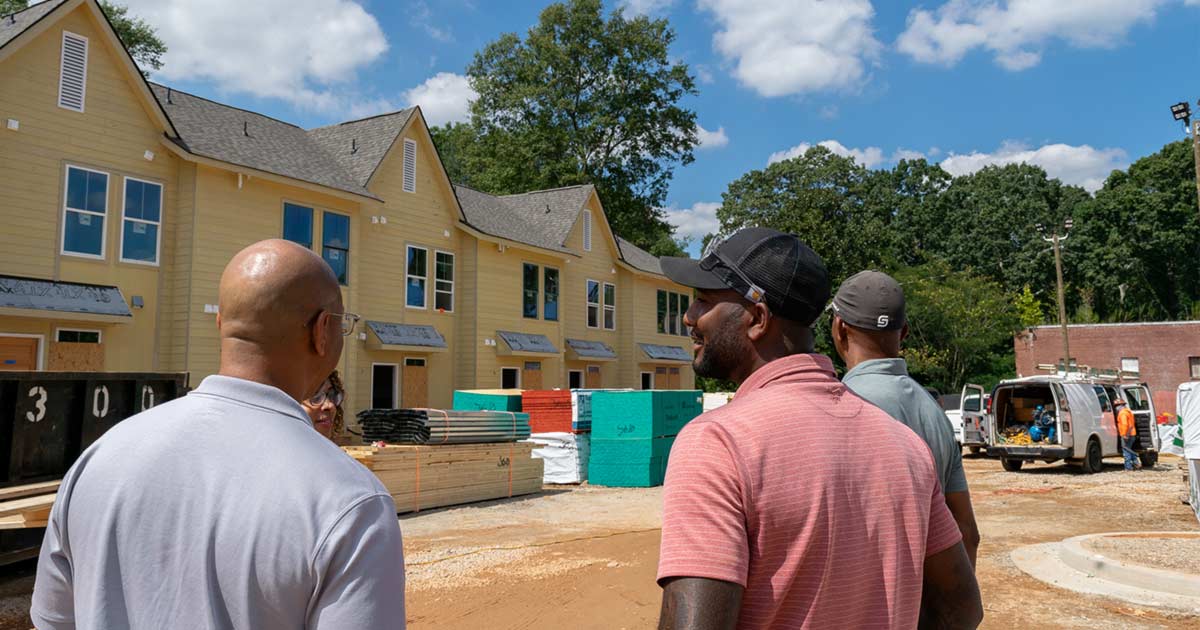
What can land banks do to support under-resourced developers?
Land banks can support under-resourced developers by:
- Building intentional relationships with under-resourced developers.
- Using their unique land bank powers and leveraging partnerships to reduce the costs of building affordable units.
Building intentional relationships with under-resourced developers
Entities looking to partner with under-resourced developers often cannot find developers, and developers looking for resources cannot find them. Land banks are no exception to this.
This is in part because many infill developers do not lead with the title of developer, despite serving in this role. A developer oversees the project from start to end: identifying the opportunity, assembling financing, overseeing construction, and eventually leasing or selling. However, developers who work on small-scale projects often position themselves professionally as realtors or general contractors rather than as a “developer.” There is no simple way to distinguish a realtor who personally buys and renovates a home prior to listing from a realtor who only sells homes.
One way land banks can identify under-resourced developers is by connecting with the organizations who already reach them. For example, The Builder Coalition in the Greater Boston area is working to increase access and diversity in the real estate sector. In Atlanta, Momentus Capital ran an Equity, Diversity, and Inclusion (EDI) initiative that provides emerging non-white developers with training and financial coaching.
After land banks connect with these developers, they can distribute Requests for Proposals (RFPs) and share program information.
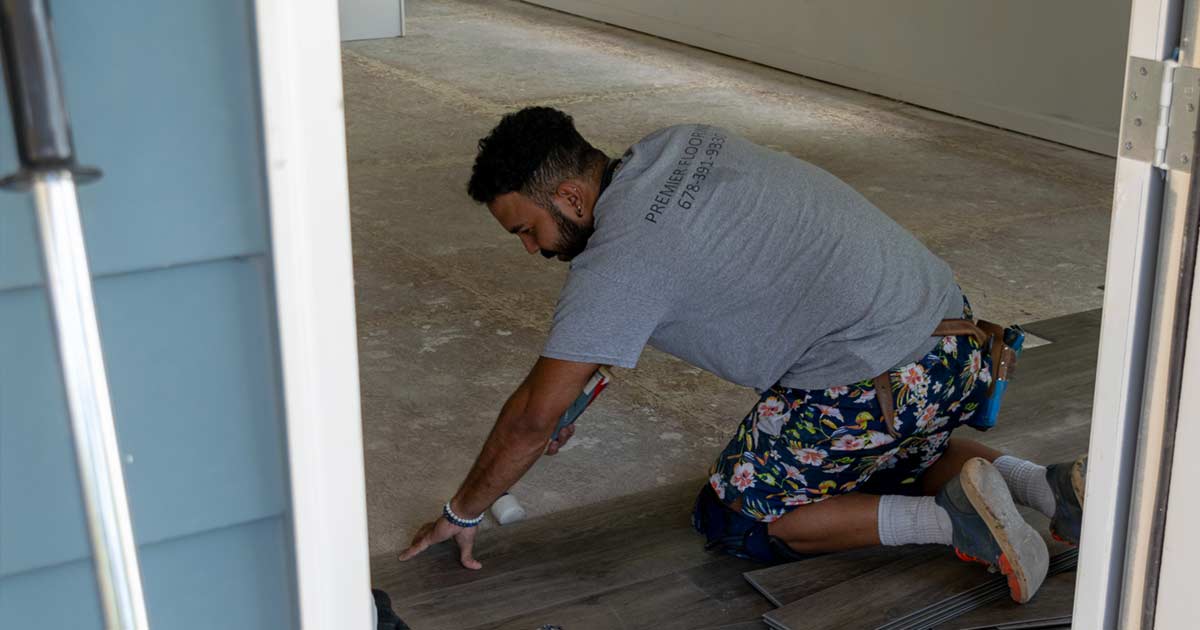
Land banks can also build relationships with under-resourced developers on their own. In 2021, the Omaha Municipal Land Bank (OMLB) created its Ambassador Program to increase the number of stakeholders and community members engaged with the land bank. The program provides ambassadors with information about OMLB’s work and impact, while also helping the land bank become a better neighbor.
OMLB has since expanded the program, involving more residents in shaping policies that reflect community needs, particularly advancing opportunities for underserved residents, and better supporting emerging developers. Following community-informed discussions, OMLB introduced a scorecard for evaluating property applications, which includes community-identified criteria such as whether the project benefits the local area, and criteria to consider when providing discounts on property.
Using unique land bank powers and existing partnerships to reduce costs of building affordable units
The cost to develop green, affordable infill housing is too high to keep sales prices or rents affordable. Developers who seek to build green, affordable infill housing face several barriers. Land costs in rising markets are high, and zoning requiring larger houses makes development expensive.
While some of these factors are outside of land banks’ control, they do have the power to help reduce costs.
Reducing costs by using unique land bank powers
No two land banks—and no two communities—are identical. A land bank’s flexibility to respond to local challenges and opportunities sets it apart from other entities. While land bank powers vary state to state, many land banks can:
- Flexibly sell property to a responsible buyer or developer, driven not by the highest price but by the outcome that most closely aligns with community goals, and
- Hold property tax-exempt to save costs.
Some land banks are already using these powers to facilitate resident-centered reuse—and others could follow in their example.
The Infill Housing Lots Disposition Policy of the Detroit Land Bank Authority
The Infill Housing Lots Disposition Policy of the Detroit Land Bank Authority provides a 50 percent purchase price discount if 25 percent of the units are affordable to 80 percent of AMI, or an 80 percent discount if 25 percent of the units are affordable to 50 percent AMI. The land bank requires the developer to agree to 10 years of affordability monitoring by the City of Detroit.
The Land Banking Depository Agreement Program of the Metro Atlanta Land Bank
The land banking depository agreement program of the Metro Atlanta Land Bank (MALB) allows an entity to transfer a property to the land bank to be held tax-exempt for up to five years while an affordable housing project is completed. After development is complete, MALB transfers the property back to the initial entity. MALB also offers maintenance and insurance as pass-through costs.
Historically, MALB had only partnered with local nonprofit developers and the Atlanta Land Trust. However, MALB is currently piloting a project with a mission-driven developer to support the development of 100 affordable housing units. Land banks in other parts of the country could similarly permit mission-driven developers to take advantage of their land depository programs.
Reducing costs by leveraging partnerships
Many land banks are evolving from purely transactional entities into transformational community partners that use multi-faceted, entrepreneurial approaches to investing in people and places. This approach is inclusive of under-resourced developers, who often live and work in disinvested communities.
The Chesapeake Land Bank Authority’s partnership to revise zoning requirements
One example is the work the Chesapeake Land Bank Authority (CLBA) has done to unlock infill redevelopment potential.
Local zoning requirements are one factor that can impede affordable housing creation. Minimum home square footage requirements vary by municipality and property location. But when using the average industry standard of $150 per square foot and requiring a new home to be a minimum of 2,000 square feet versus 1,500 square feet, the construction cost alone increases by an additional $75,000.
Developers may request variances or lead efforts to change local policies to support developing a smaller, affordable product. However, the process of requesting a variance and meeting with local stakeholders may take months and offer no guarantees of approval. For less-resourced developers, this cost in time and energy threatens already thin margins.
In multiple instances, CLBA worked with the City of Chesapeake’s Department of Planning to advance amendments to the Urban Overlay and city zoning ordinance to make redevelopment possible on certain vacant lots. This type of work lessens the burden on under-resourced developers.
Land banks and CDFIs: Home HeadQuarters partnership to break down homeownership barriers
Another example is the relationship that multiple land banks have with Home HeadQuarters. Home HeadQuarters is a nonprofit housing organization and US Treasury-certified Community Development Financial Institution (CDFI) that has been tackling equitable homeownership and lending challenges in New York for almost 30 years.
Under-resourced developers lack access to adequate, flexible capital and financial institutions perceive them as risky. Home HeadQuarters has stepped up as a creative problem-solver that fills a gap left by traditional lenders who refused to underwrite loan products for rehab of formerly vacant owner-occupied housing (purchase, construction, and mortgage financing) as well for “mom and pop” investors and responsible landlords who cannot access capital.
Albany County Land Bank, Buffalo Erie Niagara Land Improvement Corporation, Chautauqua County Land Bank, Greater Syracuse Land Bank, and Rochester Land Bank Corporation are among the New York land banks that collaborate with Home HeadQuarters—each in their own way, specific to their community’s needs. This type of partnership helps small-scale rehabbers and first-time homeowners overcome barriers to lending and capacity.
Conclusion
Land banks are natural partners to provide additional support for under-resourced developers. Closing the representation gap will take time, especially for those working to bring crucial affordable infill housing to neighborhoods that have experienced historic disinvestment. But these changes will not only benefit under-resourced developers but also help land banks and the communities these developers serve.
Looking to go even deeper?
- Breaking Barriers for Under-Resourced Developers: Insights and Recommendations for Developers, Philanthropists, Land Banks, and Other Stakeholders summarizes the challenges under-resourced developers encounter and offers even more recommendations for how key partners can support under-resourced developers across the country in building more green, affordable infill housing.
- The Road Ahead for Land Banks: Opportunities for Growth and Greater Equity explores how land banks have evolved over the past 40 years, case studies of land banks stepping up to serve their communities in creative ways, and recommendations for land banks looking to do even more.
Subscribe to join 14,000 community development leaders getting the latest resources from top experts on vacant property revitalization.