Developing Practical Tools to Scale Up Land Banking Across Georgia
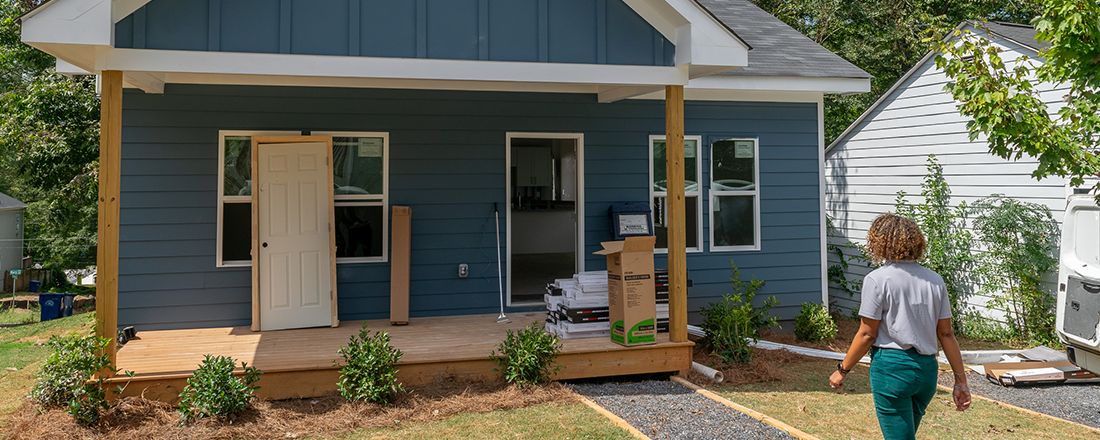

Georgia
Project Date: 2013
Services: Educational Resources
Client: Georgia Association of Land Bank Authorities (GALBA)
Addressing the Gap Between Opportunity and Reality
When Georgia expanded land bank powers under the Georgia Land Bank Act in 2012, it created a significant opportunity for neighborhood revitalization—but not every community was positioned to take advantage of it. Many communities lacked the funding, legal expertise, and technical capacity to establish and operate effective land banks. This left local governments ill-equipped to tackle growing inventories of vacant, tax-delinquent properties.
THE TASK
Community Progress partnered with Valdosta/Lowndes County Habitat for Humanity and the US Department of Housing and Urban Development to help communities across Georgia establish and sustain effective land banks.
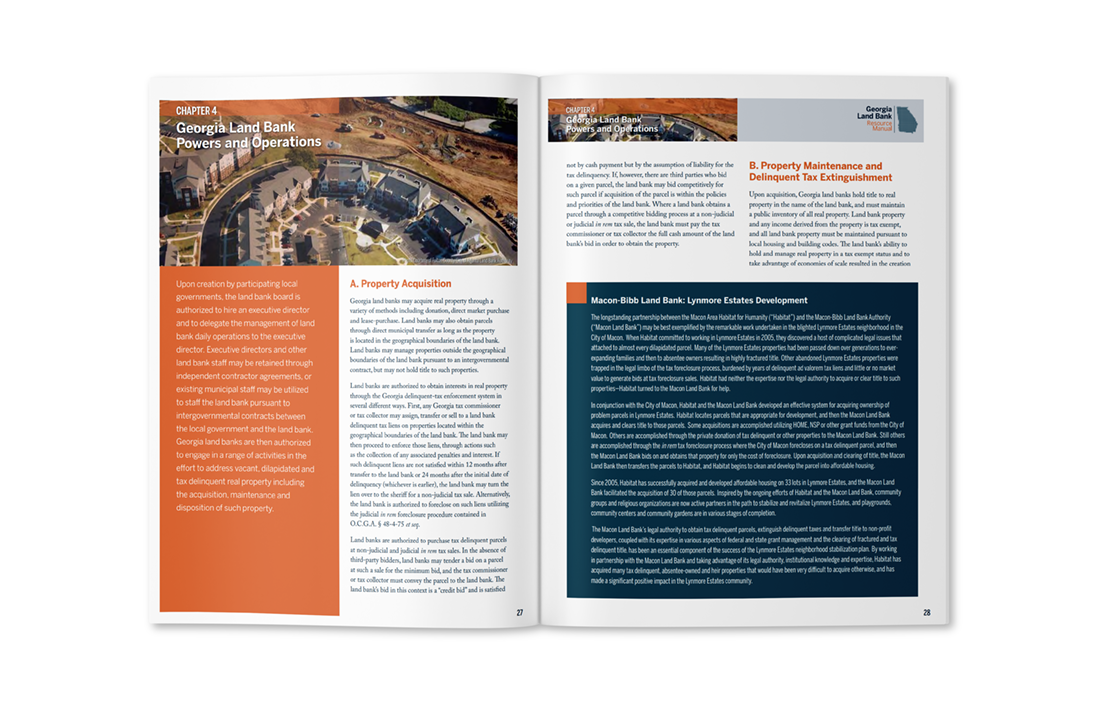
Central to this effort was the Georgia Land Bank Resource Manual, a guide that translated key provisions of the Georgia Land Bank Act into actionable guidance for under-resourced communities. This manual highlighted opportunities for regional land banking, explained self-financing tools like tax recapture programs, and offered frameworks for communities to set their own priorities for property acquisition, maintenance, and disposition.
We also worked with our partners to amplify success stories from land banks across the state, using real-world examples and peer experiences, to inspire other communities addressing vacancy.
SOLUTION
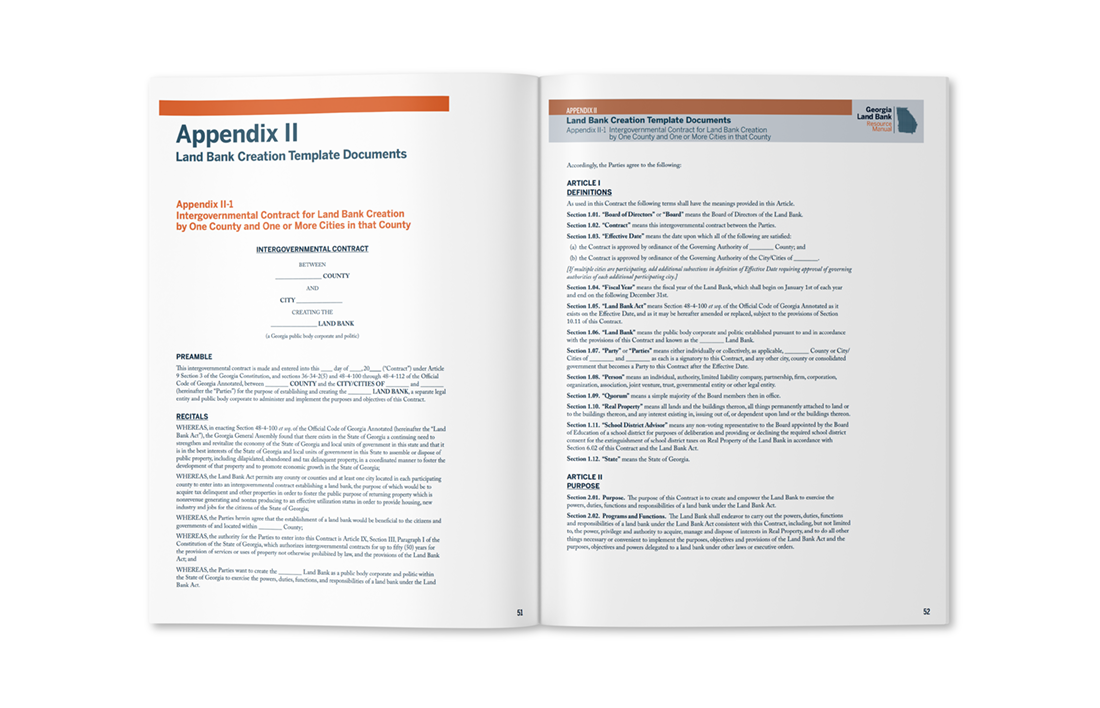
The Georgia Land Bank Resource Manual gives practitioners across the state everything they need to get started with land banking. It covers the history of land banking in Georgia, key statutes, considerations for land bank operations, and success stories. The core of the manual is a suite of ready-to-use legal templates that directly aid implementation. These include intergovernmental contracts, administrative policies, a land bank depository agreement, and a tax extinguishment resolution.
By providing sample documents, the manual eliminated a significant barrier to land banking for places that lacked in-house legal and administrative capacity develop such materials on their own.
IMPACT
As a direct result of the Georgia Land Bank Resource Manual, the number of land banks in Georgia has more than doubled. The manual has become an essential and widely used resource among local governments.
The manual’s standardized templates and model documents created consistency in policy and practice statewide. It has saved local governments thousands of hours in legal and administrative work and significantly reduced the financial burden of starting a land bank.
The manual also fostered a culture of collaboration. By sharing peer experiences and real-world examples, it helped communities learn from one another and refine their approaches over time.
As the ecosystem for land banks in Georgia grew stronger and their needs evolved, Community Progress supported the development of a new resource: the 2022 Resource Guide for Georgia Land Banks. This follow-up toolkit highlights innovative strategies and emerging best practices from across the state for land banks ready to take their impact to the next level.
Pages from the Manual
Interested in these services for your community? We can help! Contact the Technical Assistance Team »
Subscribe to join 14,000 community development leaders getting the latest resources from top experts on vacant property revitalization.