
Helping the Tri-COG Land Bank Develop a Strategy to Transform Vacant Properties in Pennsylvania


Mon Valley region, PA
Project Date: 2023
Services: Land Bank Strategic Planning
Client: Tri-COG Land Bank
Positioning the Land Bank for the Next Era of Revitalization
The communities the Tri-COG Land Bank (TCLB) serves carry the weight of industrial decline. Rooted in the steel and manufacturing legacy of the greater Pittsburgh region, many municipalities have faced decades of economic contraction, population loss, and disinvestment, leaving some with nearly one-third of their properties sitting vacant.
Created in 2017, TCLB spent its early years building trust and fostering voluntary collaboration among member municipalities, school districts, and Allegheny County. However, limited local capacity made it difficult to return properties to productive use at scale, and the land bank itself lacked capacity to tackle the full scale of widespread vacancy.
To meet the challenge and become a catalyzing force for regional revitalization, TCLB needed a bold, shared vision and a concrete roadmap for making it happen.
THE TASK
TCLB engaged the Center for Community Progress to lead the development of a comprehensive five-year strategic plan.
We facilitated an inclusive planning process to ensure the plan reflected regional priorities. Stakeholders included TCLB board members, nonprofits, philanthropic partners, state-level officials, and groups involved in vacant land stewardship. We carefully listened to the community’s input as they shared their goals and priorities for the land bank, and worked to build a shared understanding of what the land bank could become.
Our approach included:
- A comprehensive review of Pennsylvania’s state-enabling land bank legislation, TCLB’s business plan, policies, procedures, organizational structure, and relevant regional planning and economic development reports.
- Leveraging our expertise as the national experts on land banking to share best practices and adaptable strategies suited to TCLB’s regional context.
- Virtual interviews and in-person workshops with TCLB board members, staff, and key partners to identify organizational strengths, surface challenges, and priorities, as well as opportunities for future partnerships and growth.
SOLUTION
The result was a forward-looking, actionable strategy grounded in stakeholder input and national best practices.
The plan established a clear narrative for TCLB, positioning them as a land bank moving from start-up to scale. We helped emphasize that their strong credibility, programs, and partnerships gave them a solid foundation to expand their impact more strategically and with greater reach. Key elements of the plan included revised mission and vision statements, along with a new purpose statement that better reflected their organizational values and unique role in the community; and a formal commitment to equity, articulated for the first time, that established a clear, intentional focus on equitable outcomes across all of TCLB’s work.
It included five strategic priority areas, each with actionable goals and tactics:
- Increasing homeownership opportunities through home rehabilitation
- Supporting community resiliency by reclaiming and repurposing vacant land
- Updating policies and operational practices to promote equitable outcomes
- Expanding education and engagement with members, residents, and key stakeholders
- Elevating regional goals to drive necessary policy changes
The plan also outlined internal priorities needed to reach strategic goals, including expanded staff capacity, flexible multi-year funding, and partnerships necessary to deliver new programming.
IMPACT
Since we delivered the strategic plan in 2023, TCLB has made considerable progress.
- TCLB launched a “Renovations Lite” program, streamlining in-house rehabilitation to bring properties up to code efficiently and cost-effectively. By leveraging new internal capacity and state grant funding, this program has increased the supply of move-in-ready homes and created new pathways to homeownership for first-time buyers.
- TCLB partnered with the Housing Alliance of Pennsylvania to secure land bank inclusion in Pennsylvania’s Housing Action Plan. This resulted in stronger provisions to build land bank capacity and improve operational effectiveness across the Commonwealth.
- TCLB is implementing innovative approaches to address vacant lots, including lease-to-own models, low-maintenance greening of post-demolition parcels, and exploring solar redevelopment opportunities.
- TCLB has leveraged the plan’s long-term vision to attract more than $1 million in general operating support from local philanthropies. This flexible funding has enabled TCLB to grow its portfolio, expand its reach, and strengthen its capacity to better serve its members.
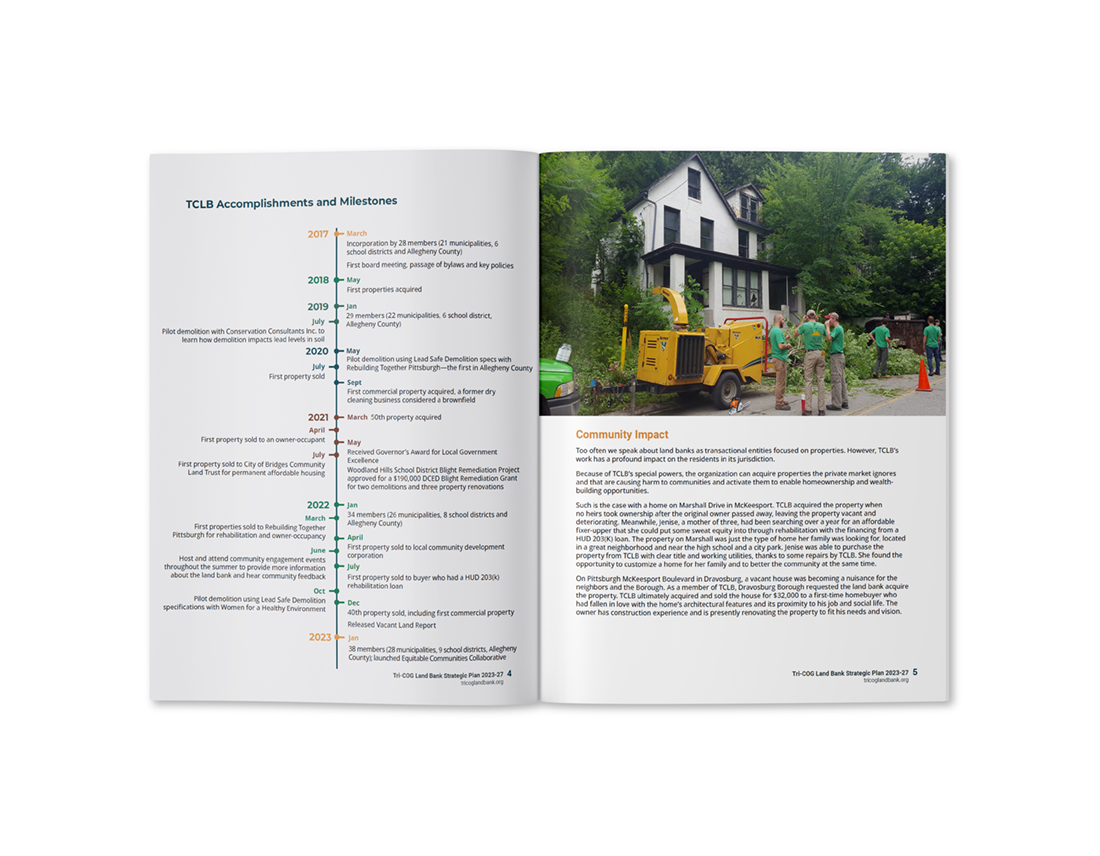
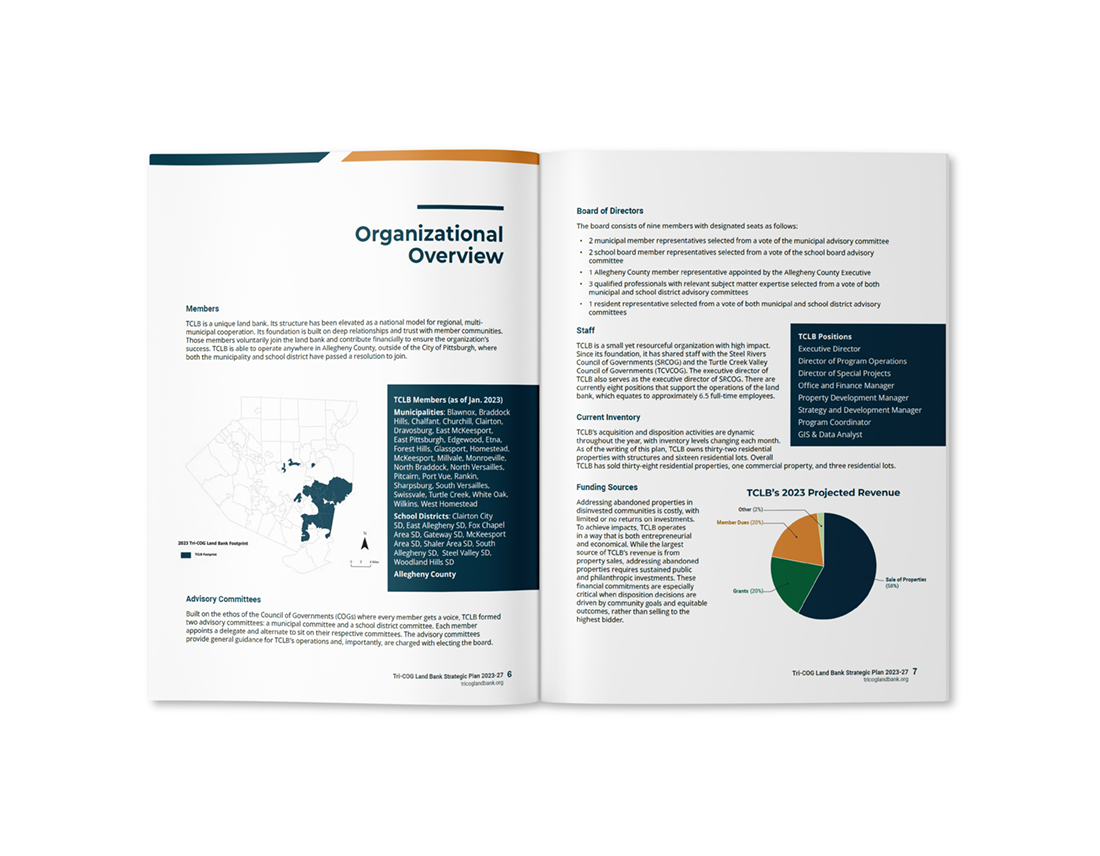
Pages from the Final Plan
Interested in these services for your community? We can help! Contact the Technical Assistance Team »
Subscribe to join 14,000 community development leaders getting the latest resources from top experts on vacant property revitalization.