Blog

Home » Blog

Our blog unpacks complex approaches to community revitalization so you feel ready to return vacant properties to productive use. Sign up for our newsletter to get solutions in your inbox.

Filter by Date

Topics
What does equitable code enforcement look like? How Louisville is taking steps to use its code enforcement process to advance racial equity
November 30, 2022
What does equitable code enforcement look like? How Louisville is taking steps to use its code enforcement process to advance racial equity

With technical assistance support from Community Progress, Louisville is reforming their housing and building code enforcement with equity in mind.

Read More »
A Message from President and CEO Akilah Watkins
September 14, 2022
A Message from President and CEO Akilah Watkins

Dear friends and supporters of the Center for Community Progress, With great sadness and great gratitude, I announce that I will be departing from the Center for…

Read More »
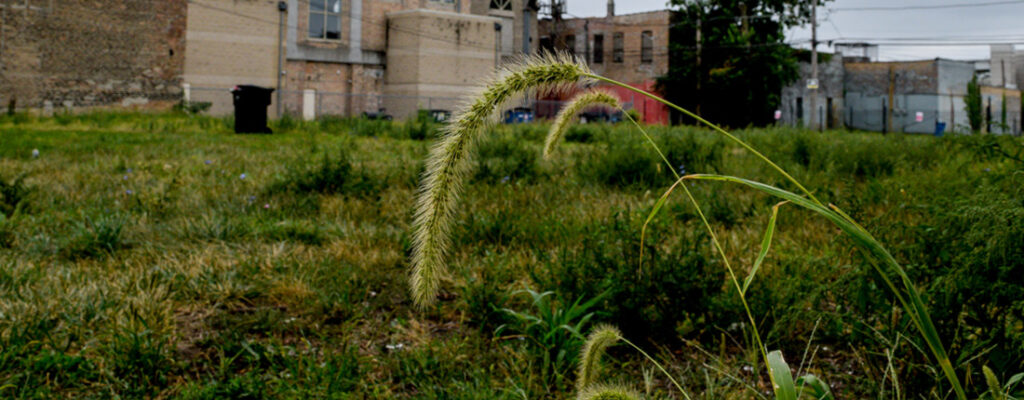
Resident Engagement in Vacant Lot Greening: Empowering Communities for Neighborhood Revitalization
September 1, 2022
Resident Engagement in Vacant Lot Greening: Empowering Communities for Neighborhood Revitalization

This is an excerpt of Chapter 11 of Tackling Vacancy and Abandonment: Strategies and Impacts After the Great Recession, jointly produced by the Center for Community Progress,…

Read More »
Over Forty National, Local, and Land Bank Stakeholders Join Community Progress in Asking Bank Regulators to Strengthen the CRA
August 30, 2022
Over Forty National, Local, and Land Bank Stakeholders Join Community Progress in Asking Bank Regulators to Strengthen the CRA

On August 5th, 2022, Community Progress and forty-three supporting organizations across the country submitted a public comment calling for the modernized Community Reinvestment Act to center racial…

Read More »
Building Resilience: Leveraging Innovative Partnerships and Low Cost Capital to Meet Affordable Single-Family Housing Needs
August 25, 2022
Building Resilience: Leveraging Innovative Partnerships and Low Cost Capital to Meet Affordable Single-Family Housing Needs

This is an excerpt of Chapter 10 of Tackling Vacancy and Abandonment: Strategies and Impacts After the Great Recession, jointly produced by the Center for Community Progress,…

Read More »
Land Banks and Community Land Trusts: Emerging Partners for a Resilient and Equitable Recovery
August 2, 2022
Land Banks and Community Land Trusts: Emerging Partners for a Resilient and Equitable Recovery

This is an excerpt of Chapter 9 of Tackling Vacancy and Abandonment: Strategies and Impacts After the Great Recession, jointly produced by the Center for Community Progress,…

Read More »
Read President/CEO Dr. Akilah Watkins’ US House of Representatives Ways & Means Committee Affordable Housing Testimony
July 27, 2022
Read President/CEO Dr. Akilah Watkins’ US House of Representatives Ways & Means Committee Affordable Housing Testimony

On July 13, Community Progress CEO and President Dr. Akilah Watkins spoke before the The US House of Representatives Ways & Means Committee in a hearing called “Nowhere to…

Read More »
Lessons from 2022 VAD Academy
July 18, 2022
Lessons from 2022 VAD Academy

On June 15, more than 900 people joined us for the 2022 VAD Academy—a day-long virtual bootcamp for professionals and community partners whose work and communities are…

Read More »
Approaches to Rural Property Vacancy in Law and Policy
June 17, 2022
Approaches to Rural Property Vacancy in Law and Policy

This is an excerpt of Chapter 8 of Tackling Vacancy and Abandonment: Strategies and Impacts After the Great Recession, jointly produced by the Center for Community Progress,…

Read More »
A History of Ohio Land Banking 2009–2021: From Legislation to Operation
June 6, 2022
A History of Ohio Land Banking 2009–2021: From Legislation to Operation

This is an excerpt of Chapter 7 of Tackling Vacancy and Abandonment: Strategies and Impacts After the Great Recession, jointly produced by the Center for Community Progress,…

Read More »
How a New Jersey Land Bank is Converting Vacant Properties into Homes for Housing Choice Voucher (HCV) Holders

Learn how Newark, New Jersey is leveraging an underutilized HCV provision to make homeownership a reality for low-income residents.

Read More »
How Philanthropy Powers Land Bank Success 

Examples of how philanthropic partnerships have helped land banks launch new programs to revitalize communities.

Read More »
Five Creative Placemaking Projects Reimagining Live-Work Spaces

Examples of live-work unit projects that are transforming their neighborhoods through creative placemaking.

Read More »
How to Explain Vacant Property Work: A Plain Language Guide

Talking about community revitalization is hard. Here’s some ways to explain vacancy when people don’t understand your work.

Read More »
How Land Banks are Reusing Vacant Land to Build Climate Resilience

Examples of how land banks are transforming vacant land into climate resilience assets through flood mitigation, greening, and partnerships.

Read More »
Why You Should Attend the NLBN Summit—Even if You Don’t Work at a Land Bank

The NLBN Summit is your chance to better understand how land banks work and how they can support your goals around developing housing, reusing vacant land, and helping neighborhoods bounce back from economic decline.

Read More »
The Basics of Brownfield Redevelopment: Finding and Assessing Brownfields

Brownfield redevelopment reclaims the potential of underutilized properties, improves a neighborhood’s health and wellbeing, and can spark community revitalization.

Read More »
How Opportunity Zones 2.0 Can Leverage Existing Vacant Property Inventories

Ideas for Opportunity Zones 2.0 to leverage existing vacant properties in distressed communities, with land bank support.

Read More »
What is a Land Bank?

A land bank is a public entity with unique powers to put vacant, abandoned, and deteriorated properties back to productive use according to community goals.

Read More »
What is a Brownfield?

Brownfield properties, often referred to as “brownfields,” are properties where the presence or potential presence of hazardous substance, pollutant, or contaminant makes redevelopment challenging and costly.

Read More »