Blog

Home » Blog

Our blog unpacks complex approaches to community revitalization so you feel ready to return vacant properties to productive use. Sign up for our newsletter to get solutions in your inbox.

Filter by Date

Topics
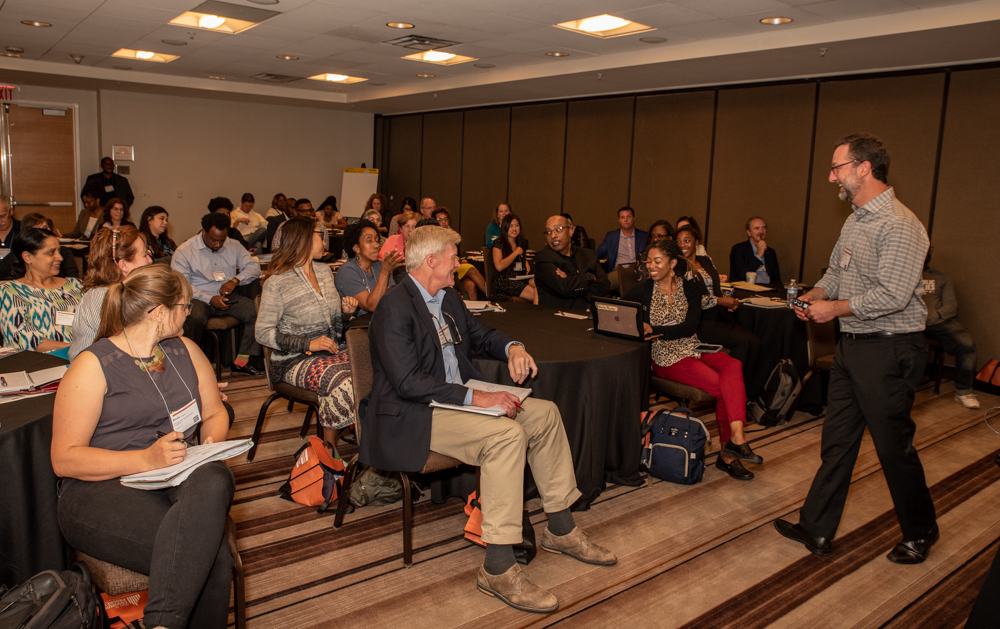
Submitting a Session Proposal for the 2022 Reclaiming Vacant Properties Conference? Read This First.
February 14, 2022
Submitting a Session Proposal for the 2022 Reclaiming Vacant Properties Conference? Read This First.

If you’re here, it probably means you’re thinking about submitting a session proposal to Community Progress’ flagship conference, Reclaiming Vacant Properties. Luckily, we’ve got you covered with…

Read More »
State Policy and Problem Property Regulation
February 9, 2022
State Policy and Problem Property Regulation

This report is derived from From State Capitols to City Halls, a working paper prepared by Alan Mallach pursuant to a joint program agreement between the Center…

Read More »
Where is the vacant property agenda?
February 2, 2022
Where is the vacant property agenda?

This is an excerpt of Chapter 1 of Tackling Vacancy and Abandonment: Strategies and Impacts After the Great Recession, jointly produced by the Center for Community Progress,…

Read More »
#LoveThatLot 2022: Show Your Favorite Formerly Vacant Lots Some Love
February 1, 2022
#LoveThatLot 2022: Show Your Favorite Formerly Vacant Lots Some Love

February is a special month at the Center for Community Progress. And that’s because it’s time for our annual Valentine’s Day celebration, #LoveThatLot, where you share with…

Read More »
Treasury’s Final Rule Is Here; Here’s What You Should Know About Using ARPA Funds to Address Vacancy
January 12, 2022
Treasury’s Final Rule Is Here; Here’s What You Should Know About Using ARPA Funds to Address Vacancy

The long-awaited Final Rule on the American Rescue Plan Act (ARPA) State and Local Fiscal Recovery Fund (SLFRF) was released by the U.S. Treasury Department on Thursday,…

Read More »
Communities Across the US Are Addressing Property Deterioration and Vacancy With ARPA
November 16, 2021
Communities Across the US Are Addressing Property Deterioration and Vacancy With ARPA

States, Tribes, counties, and municipalities around the country have been hard at work determining how to use their allocations from the American Rescue Plan Act’s $350 billion State and Local Fiscal…

Read More »
A Pioneering Approach to Bring a Legacy of Quality, Affordable Housing to Communities
November 15, 2021
A Pioneering Approach to Bring a Legacy of Quality, Affordable Housing to Communities

Communities nationwide struggle with inventories of properties that are causing harm—properties that are vacant, abandoned, and deteriorated (VAD). Often these properties are concentrated in areas where an intentional history of racist policies resulted in disinvestment…

Read More »
New Research Publication Launched: Tackling Vacancy and Abandonment: Strategies and Impacts after the Great Recession
September 29, 2021
New Research Publication Launched: Tackling Vacancy and Abandonment: Strategies and Impacts after the Great Recession

WASHINGTON, D.C. –   Center for Community Progress announces the launch of Tackling Vacancy and Abandonment: Strategies and Impacts after the Great Recession, a research publication jointly produced with the Federal Reserve…

Read More »
Community Progress Weighs in on $350 Billion ARPA State and Local Recovery Fund
July 14, 2021
Community Progress Weighs in on $350 Billion ARPA State and Local Recovery Fund

Center for Community Progress recently submitted a public comment letter in response to the Treasury Department’s Interim Final Rule (“IFR”) implementing the American Rescue Plan Act’s (“ARPA”)…

Read More »
Michigan Initiatives Quarterly Update: April – June 2021
July 1, 2021
Michigan Initiatives Quarterly Update: April – June 2021

This quarterly update from Community Progress’ Michigan Initiatives team highlights important revitalization news and resources from across the state. For specific inquiries or to share how your…

Read More »
Why Home Repair Programs Are Essential for Preventing Property Vacancy and Abandonment

Home repair is a core strategy to stop properties from becoming vacant in the first place.

Read More »
How Better Data Helps Communities Address Vacancy

What data sources you should be looking at if you’re interested in understanding, tracking, and solving property vacancy in your community.

Read More »
Tips for a Successful Session Proposal for the Reclaiming Vacant Properties Conference

How to write a session proposal for the Reclaiming Vacant Properties Conference that will get noticed.

Read More »
How a New Jersey Land Bank is Converting Vacant Properties into Homes for Housing Choice Voucher (HCV) Holders

Learn how Newark, New Jersey is leveraging an underutilized HCV provision to make homeownership a reality for low-income residents.

Read More »
How Philanthropy Powers Land Bank Success 

Examples of how philanthropic partnerships have helped land banks launch new programs to revitalize communities.

Read More »
Five Creative Placemaking Projects Reimagining Live-Work Spaces

Examples of live-work unit projects that are transforming their neighborhoods through creative placemaking.

Read More »
How to Explain Vacant Property Work: A Plain Language Guide

Talking about community revitalization is hard. Here’s some ways to explain vacancy when people don’t understand your work.

Read More »
How Land Banks are Reusing Vacant Land to Build Climate Resilience

Examples of how land banks are transforming vacant land into climate resilience assets through flood mitigation, greening, and partnerships.

Read More »
Why You Should Attend the NLBN Summit—Even if You Don’t Work at a Land Bank

The NLBN Summit is your chance to better understand how land banks work and how they can support your goals around developing housing, reusing vacant land, and helping neighborhoods bounce back from economic decline.

Read More »
The Basics of Brownfield Redevelopment: Finding and Assessing Brownfields

Brownfield redevelopment reclaims the potential of underutilized properties, improves a neighborhood’s health and wellbeing, and can spark community revitalization.

Read More »